Military Dating vs Traditional Apps: Why Niche Wins
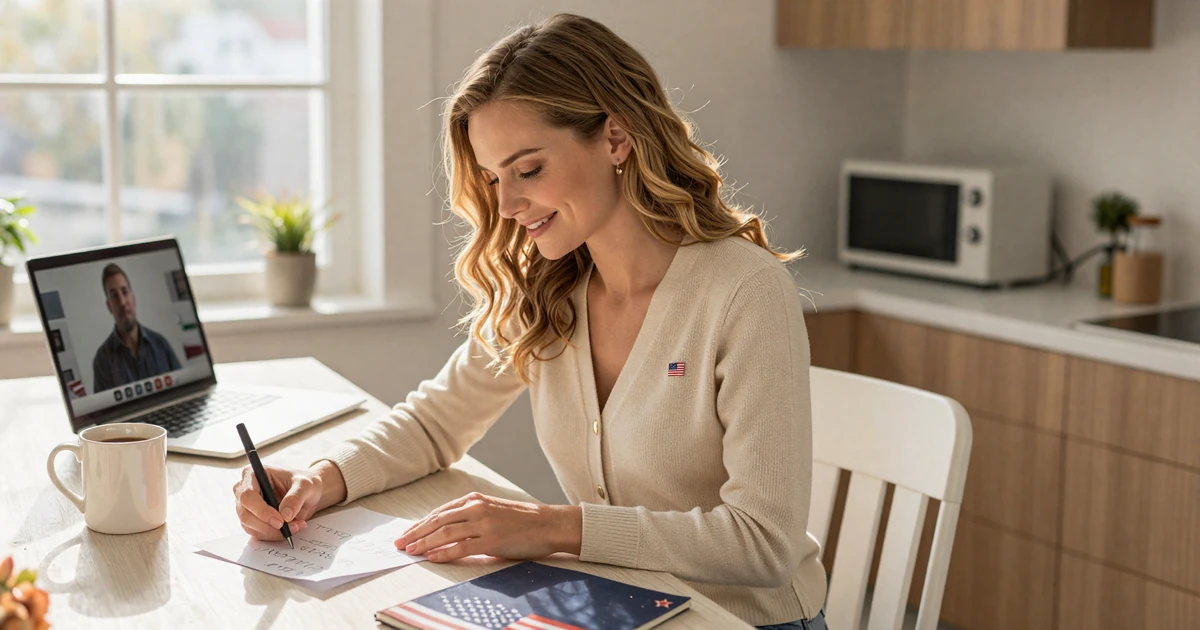
Tired of Swiping and Getting Nowhere?
If you opened Tinder this week and felt nothing but exhaustion, you are not alone. The global dating-app market hit $12.5 billion in 2026, yet the biggest platforms are losing paying users for the first time in a decade. Roughly 79% of dating-app users now report what researchers politely call "dating fatigue" - the rest of us just call it burnout from swiping through hundreds of strangers to find no one we'd actually want to meet for coffee.
The women who are quietly winning the dating game right now have done one thing differently: they stopped trying to fix a broken funnel and switched to a platform built around what they actually want. For women hoping to meet a service member or veteran, that means moving from mass-market apps to legit military dating sites where every profile already passes a values filter you don't have to enforce yourself.
★ TL;DR - Why Niche Beats Mass-Market
- 79% of swipe-app users report dating fatigue (2026 industry data).
- 87% of Hinge users want serious relationships - yet match quality stays low.
- Niche platforms verify identity with .mil emails, DD214s, and document checks.
- 52% of Gen Z and 49% of millennials now use apps specifically for long-term love.
- 27% of 2025 marriages began on an app or site (The Knot Real Weddings Study).
Swipe Culture Burnout Is Real
Swipe fatigue is the documented exhaustion users feel after hundreds of low-context, low-intent profile interactions on mass-market dating apps. Industry research in 2026 puts the figure at 79% of active users - roughly four out of every five people you'd theoretically match with are already burned out before the conversation begins. That is the experience you keep bumping into without knowing why.
The numbers behind the burnout are blunt. The U.S. is the largest dating-app market in the world with $1.45 billion in projected 2026 revenue. Tinder alone leads at $58.3 million in monthly revenue, followed by Bumble at $28.96 million and Hinge at $18.54 million. But here's the catch: only about 30% of dating-app users report ever finding a long-term relationship or marriage through them, according to Pew Research Center. The other 70% are still swiping - and many of them have been for years.
I deleted Tinder after three years of conversations that went nowhere. The morning I joined a military dating site, I had two real messages by lunchtime - both from men who actually finished reading my profile. That had not happened in 36 months of mainstream apps.
Why does swiping wear people down so fast? Because every profile is optimized for a split-second decision rather than a connection. The result is a market where Hinge users spend an average of $19 per month on a single app, even as 87% of them say they want a serious partner. The intent is there. The platform design simply doesn't match it.
Serious Relationships vs Casual Hookups
The biggest unspoken problem with mainstream apps is that they mix audiences on purpose - casual hookup seekers and marriage-minded daters compete for the same scroll, the same swipe, the same five seconds of attention. For a woman looking for the kind of partner she could introduce to her parents at Thanksgiving, that mismatch shows up as wasted weeks. Below is what the side-by-side actually looks like.
Traditional Swipe Apps
- Mixed intent - casual and serious in the same pool
- Photo-first matching, 5-second decisions
- Minimal identity verification
- Endless scroll, no shared community
- Conversations stall within 3 messages
- Premium tiers gate basic features
★ Niche Military Dating
- Serious-relationship intent stated up front
- Profiles built around values and lifestyle
- Document and .mil email verification
- Shared culture - bases, deployments, traditions
- Messages lead to real conversations and meetings
- Transparent pricing, no hidden auto-renewals
The trend is showing up in the marriage data. According to The Knot's 2025 Real Weddings Study, 27% of newly married couples that year first met on a dating app or site - and the fastest-growing segment within that group came from niche platforms, not the biggest names. Among millennials and Gen Z specifically, 49-52% now report using apps with explicit long-term intent. The audience for serious dating has never been larger. It just isn't on Tinder anymore.
Why Verification Matters on Niche Platforms
Profile verification is the single biggest reason women cite for choosing a niche military platform over a mass-market one. Leading military dating sites in 2026 run multi-layer verification - uploaded ID documents, .mil or .gov email confirmation, and in some cases VOSID (Veterans Online Services Identity Verification) that confirms service status without storing your personal data. Platforms like BadgeMatch and Luxy go further, accepting DD214 forms for a green "verified military" badge on the profile.
Compare that with how Tinder, Bumble, and Hinge handle the same problem. Most mainstream apps offer a "selfie verification" feature that confirms the person in the photos is real - but says nothing about whether their job, branch, rank, or unit is real. That is the gap military romance scams live inside. A man claiming to be a deployed Army Captain on Tinder is essentially unverifiable. The same man on a platform requiring a .mil email or document upload cannot complete the signup at all.
On a serious military dating platform, verification typically means a moderator reviewed an official document - a DD214, a current ID, or a confirmed .mil email - within 24 to 48 hours of upload. Reported profiles are reviewed inside the same window. That is the operational floor of a legit platform; anything less is theater.
Verification also enables features that change behavior. Incognito browsing lets active-duty members look at profiles without their own being publicly visible - important for OPSEC and personal privacy. Badge tiers communicate at a glance whose claims have been checked. The cumulative effect is a pool where the cost of pretending to be someone you're not is high enough that most people don't try. For more on protecting yourself either way, our military dating safety tips page covers reverse-image checks, .mil verification, and what to do if you suspect a scam.
2026 Dating Market: The Niche Movement
The 2026 dating market is no longer dominated by mass-market growth. The global online dating industry is on track to grow from $10.28 billion in 2024 to $19.33-23.35 billion by 2033-2035, but most of that growth is being captured by specialized platforms, not the big three. Mass-market apps are reporting a CAGR of just 2.03% between 2026 and 2030 - a sign of market saturation. Niche platforms are quietly running away with the new subscribers.
The audience profile tells the same story from a different angle. The 30-40 age cohort now leads the entire online dating market with a 36.8% share, and the 40+ segment is growing fastest at 9.9% CAGR. These are not casual swipers. These are women - and men - who know what they want, who can articulate it, and who have the patience to wait for verified profiles instead of infinite ones. The audience is maturing. The platforms that match that maturity are the ones winning.
Niche dating apps are also proving the model financially. Specialized platforms like Grindr ($12.9M monthly revenue) and BLK ($2.99M) show that a clearly defined community out-monetizes a broader one per active user. For military dating specifically, the appeal is even stronger: when every member already understands deployment, PCS orders, and military time, the conversations skip the explainer stage entirely.
Why Niche Platforms Win for Military Singles
If you've read this far, the question isn't whether niche platforms work better - the data settled that - it's why specifically military niche dating outperforms for the women it's built for. Six reasons keep coming up in member feedback.
- Shared cultural literacy. When everyone on the platform already knows what a deployment is, what OPSEC means, and why he can't text back for 14 hours, your first month of conversation isn't spent teaching.
- Verified service status. A green badge backed by a DD214 or .mil email shuts down the biggest fear women bring into military dating - that he isn't who he says he is.
- Stated intent at signup. Members opt into a platform marketed for serious relationships. That self-selection alone filters out the casual scroll.
- Lower scam exposure. Romance scams thrive on platforms where identity verification is optional. Military-specific verification raises the cost of pretending until it isn't worth attempting.
- Smaller, denser community. You see the same names in conversations and at base events. Reputation matters. Behavior shifts.
- Search by base proximity. Search filters built around installations - Fort Liberty, Camp Pendleton, Naval Station Norfolk - turn online matches into realistic offline meetings.
The honest takeaway: mass-market apps still work for some people some of the time, especially in dense urban markets. But if you've already decided you want a partner who serves or has served, the math stops favoring the big platforms. Building from a smaller, verified, intent-aligned pool gets you there faster - and with less of the fatigue that pushed you to search for an alternative in the first place. Our deeper read on why military dating sites are growing traces the same trend across the wider industry.